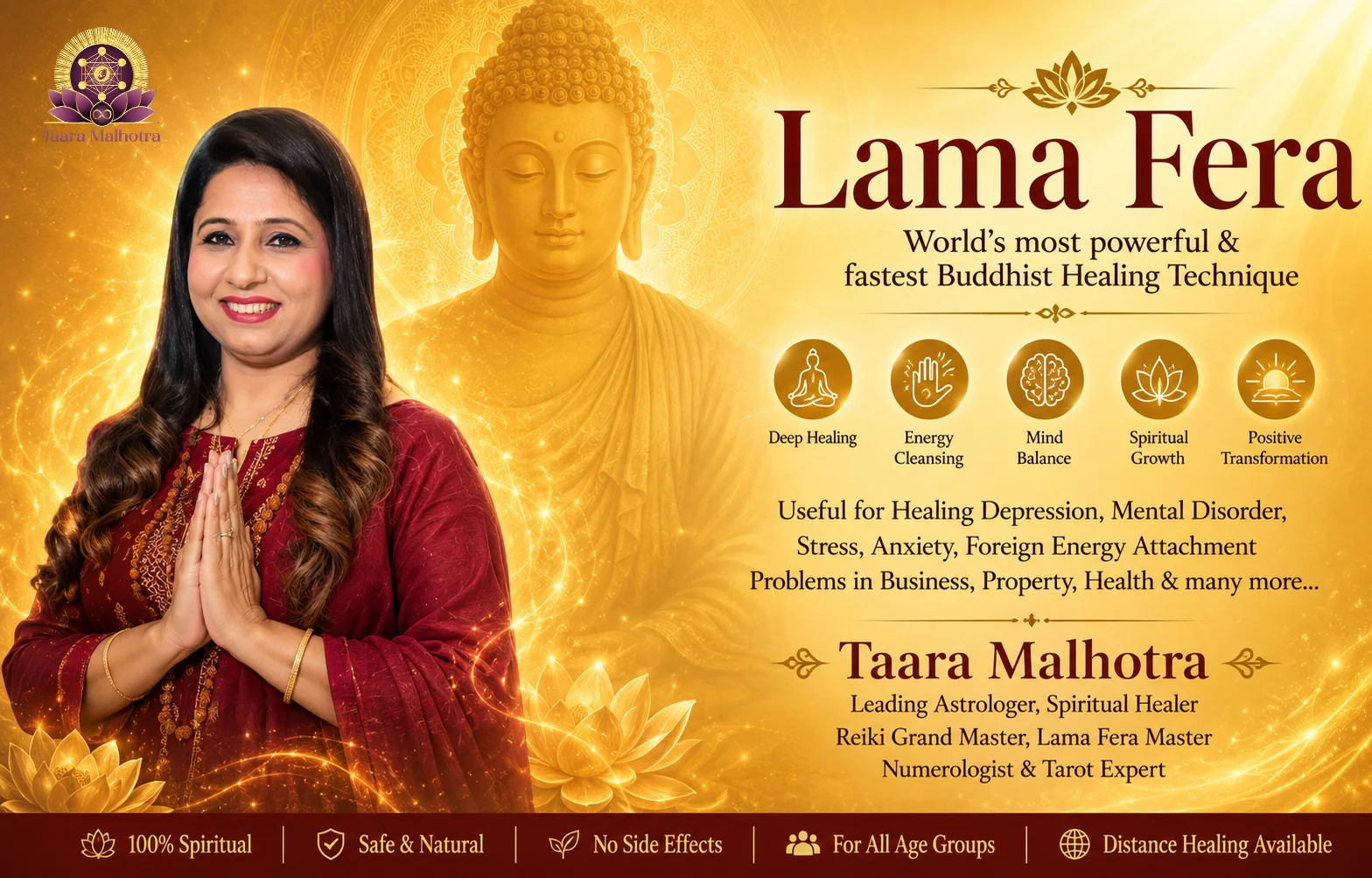
 Dr. Taara Malhotra: World-Renowned Numerologist, Astrologer & Reiki Grandmaster.

Akashic Practice for Beginners
Akashic Records Meditation: A Step-by-Step Guide for Beginners
A calm 20-minute routine with an opening statement, a guided script, better questions and honest advice on what to do with the answers.
What is Akashic records meditation?
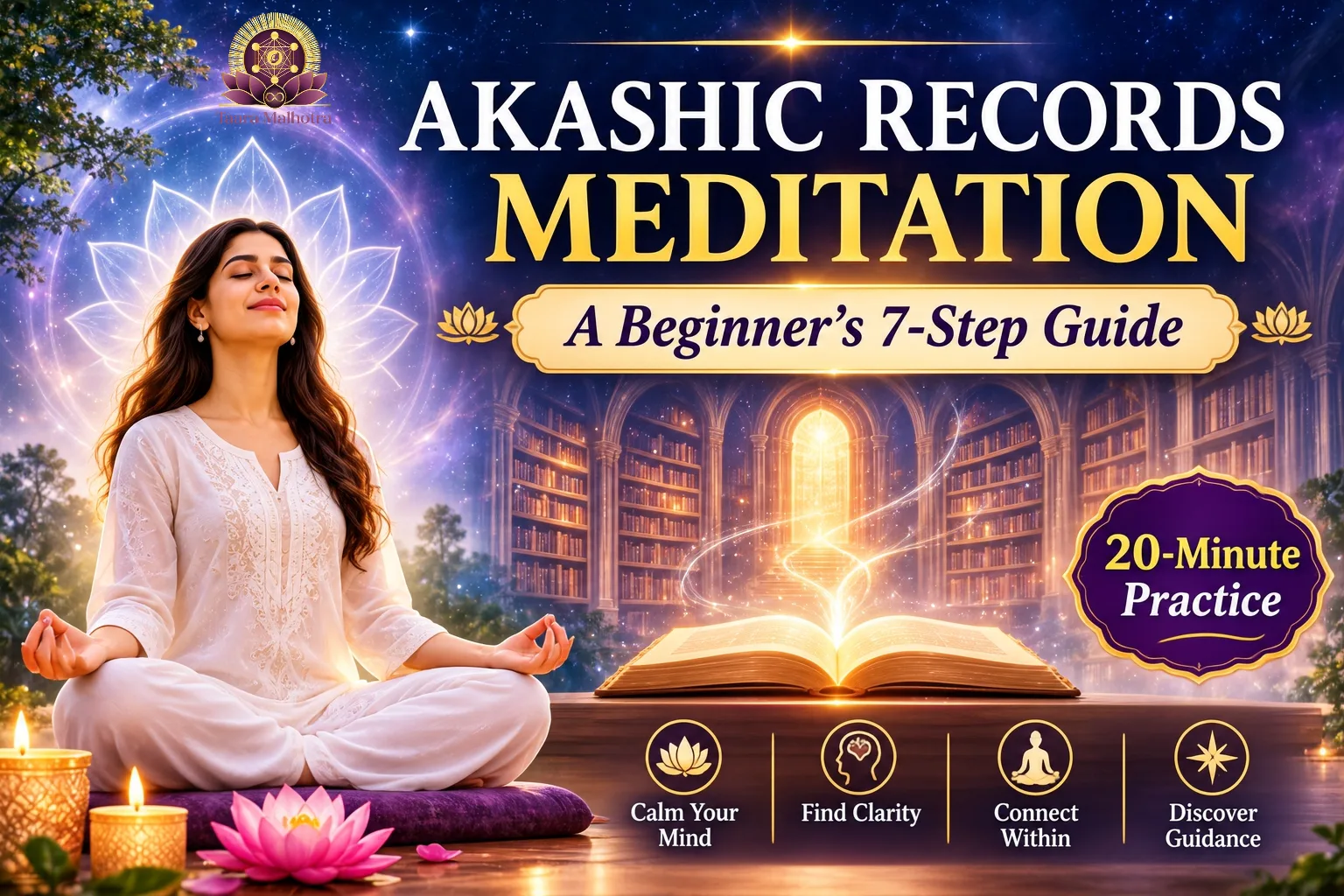
Akashic records meditation is a quiet, intention-based spiritual practice. First, you relax and ask one meaningful question. Then you notice the words, images or feelings that arise, with the aim of connecting with the Akashic records. A beginner session takes about 20 minutes: ground, set an intention, open and listen, and then close and journal.
- 20 minSuggested session
- 7Simple steps
- 1Question per sitting
- 2–3×Sessions per week
Understanding Akashic Records Meditation
Many people come to this practice when they reach a crossroads, such as a repeating relationship pattern or a career doubt. Akashic records meditation offers a structured pause in which to sit with that question instead of rushing past it.
The name comes from the Sanskrit word akasha, which points to space or ether. In this practice, it describes a subtle field that is believed to hold a record of experience.
In other words, spiritual teachers describe the records as a library of every soul’s experiences. Meditation, therefore, is the doorway many practitioners use to approach it. For example, some people experience the session as guidance from beyond themselves. Others, however, see it as a way of hearing their own intuition more clearly.
An honest note: so far, there is no scientific evidence that an Akashic record exists or that anyone can retrieve facts from it. Treat what arises as material for reflection, not as proof about your past, your future or another person.
Akashic Records Meditation vs a Reading vs a Course
These terms are often mixed up. However, the difference is mainly who does the exploring and how much instruction you receive.
| Option | Who leads it | Suited to | Where to go next |
|---|---|---|---|
| Self-guided meditation | You | Quiet reflection on one personal question | Follow the seven steps below |
| Personal reading | A practitioner | People who want someone else to facilitate the session | Akashic reading and channeling sessions |
| Structured course | A teacher | Students who want to learn a full method and practise with guidance | Akashic records reading course |
| Mindfulness meditation | You or a teacher | Attention training without any spiritual framework | A qualified mindfulness teacher or programme |
A self-guided sitting is a gentle introduction. Still, it is not training to read for other people. That work also calls for supervised practice, clear consent and ethical boundaries.
What Can This Meditation Help With?
Generally, people practise it for self-understanding. For instance, reasonable hopes include:
- Slowing down before a decision, so that your first reaction is not your only one.
- Naming a pattern that keeps appearing in work, family or friendships.
- Reflecting through writing, so that vague feelings become sentences you can examine.
- Finally, creating a ritual that gives your spiritual life regular, unhurried attention.
Of course, these are personal aims rather than guaranteed results. A calm sitting may help you feel more settled, while another may feel ordinary or restless. Therefore, judge the practice by your own honest notes over several weeks.
Above all, this practice cannot diagnose an illness, predict an exam result, choose an investment or reveal what someone else privately thinks.
Before You Begin: A Five-Point Checklist
- Time: pick a window of 25 minutes when you are awake and unhurried.
- State of mind: postpone the session if you are intoxicated, exhausted or in the middle of a crisis.
- Posture: sit in a chair or on a cushion with your back supported, because lying down often leads to sleep.
- Journal: before you start, write the date and your question on a fresh page.
- Exit plan: decide before you begin that you may open your eyes, stand up or stop at any point.
Also, you do not need crystals, incense or special clothing. Use them if they help you settle, and leave them out if they distract you.
How to Do Akashic Records Meditation in 7 Steps
Altogether, this original beginner routine adds up to 20 minutes. Lineages teach different prayers and protocols, so if you are studying with a teacher, follow the method you have been taught.
Prepare your space
2 minutesFirst, silence your phone, dim harsh light and sit where you will not be interrupted. Keep your journal and pen within reach so that you do not have to get up later. A candle or soft music is optional; quiet matters more than decoration.
Ground your body
3 minutesNext, place both feet on the floor or sit cross-legged. Then breathe in through your nose for a count of four and out for a count of six. As you do so, notice the weight of your body, the surface under you and the temperature of the air. If four and six feel strained, shorten both counts.
Set one clear intention
1 minuteAfter that, choose a single question and say it once. “What would help me understand my hesitation about this change?” works better than a list of ten worries. As a result, your attention has somewhere to rest.
Speak your opening statement
1 minuteSay, slowly: “I come with respect and an honest question. May I see only what is helpful, kind and mine to know. I am free to pause or stop at any moment.” Alternatively, you can use your own words, or a prayer from your faith or a teacher you trust.
Visualise the entrance
3 minutesPicture a calm path leading to a library, a garden or a still lake. Also, let the image stay simple. When you reach the entrance, pause, breathe and imagine a door opening. If you do not see pictures, sense the place through sound, touch or a quiet knowing.
Ask, then listen
7 minutesThen ask your question and wait. Meanwhile, allow words, images, memories, body sensations or silence to arrive without chasing them. When your mind wanders, return to one slow breath and repeat the question. Likewise, avoid arguing with or polishing what appears.
Close, return and write
3 minutesFinally, thank whatever you consider sacred, imagine the door closing and say, “This session is complete.” After that, feel your feet, move your fingers and open your eyes. Write down what you noticed before you interpret any of it.
A Guided Akashic Records Meditation Script
Read this slowly into your phone’s voice recorder, leaving long pauses where marked, and play it back during your sitting. It runs for about 11 to 12 minutes, so it works as a shorter version of the routine above. Do not listen while driving or operating machinery.
Part 1: Settle your body and open
Settle into your seat and let your hands rest. Then close your eyes, or lower your gaze to one quiet spot. Breathe in gently, and breathe out a little more slowly. (pause 30 seconds)
Next, notice your feet as the floor holds you. Also soften your jaw, your shoulders and your belly. Nothing needs to happen quickly. (pause 45 seconds)
Say silently: I come with respect and an honest question. May I see only what is helpful, kind and mine to know. I am free to pause or stop at any moment. (pause 20 seconds)
Part 2: Walk the path and enter
After a few breaths, imagine a path in early morning light. As you walk, move at your own pace. Ahead is a building, open and peaceful. It may look like an old library, a temple courtyard or simply a bright room. (pause 40 seconds)
When you reach the doorway, take one breath. Then step inside whenever you feel ready. Notice what is there. For instance, you may find a shelf, a book, a colour or only stillness. Each is welcome. (pause 45 seconds)
Part 3: Ask, listen and return
Next, find a comfortable place to sit. Then bring your question to mind and ask it once. (pause 2 minutes)
Gently ask: What am I ready to understand? Afterwards, wait without reaching for an answer. (pause 2 minutes)
Now ask: What is one kind and practical step I can take? (pause 90 seconds)
Finally, offer thanks. Then stand, walk back to the doorway and watch it close softly behind you. This session is complete. (pause 20 seconds)
After that, follow the path back to your room. Feel your seat and your feet while you move your fingers. When you are ready, open your eyes, drink some water and write.
What Questions Should You Ask?
Open questions invite reflection. In contrast, yes-or-no and prediction questions tend to feed worry and weaken your own judgement.
| Area | Instead of asking | Try asking |
|---|---|---|
| Career | Will I get this job? | Which strengths do I want my next role to use? |
| Relationships | Does this person love me? | What do I need to say or understand about this connection? |
| Family | Who is to blame? | How can I help to change this pattern? |
| Purpose | What am I destined to be? | Which activities make me feel useful and alive? |
| Emotions | Why does bad luck follow me? | What is this feeling asking me to notice? |
Also, avoid seeking private information about other people. Instead, keep the focus on your own choices and experience.
How to Make Sense of What Comes Up
Experiences vary widely, so there is no single right result. One sitting may bring a vivid scene, another a single word, and many bring ordinary thoughts about dinner or unfinished work. Still, none of this ranks you as gifted or blocked.
Use three journal columns
- Noticed: record only what happened, such as “saw a closed blue notebook” or “felt tightness in my chest”.
- Possible meaning: offer two or three interpretations, including everyday ones like a recent memory.
- Next step: choose one small, safe and reversible action, or choose to do nothing yet.
Run a simple reality check
Before acting, ask four things. First, is this message kind? Second, does it respect other people? Third, can I act on it without serious risk? Would I still agree with it after a night’s sleep? Also set aside anything that frightens you, flatters you extravagantly, demands urgency or tells you to cut people off, spend large sums or stop treatment.
Finally, review your notes after two weeks. Themes that stay steady are often more useful than any single dramatic image. If you are curious how others describe their experiences, see these accounts of reflection and change through the Akashic records.
Common Difficulties and Simple Fixes
| What happens | Likely reason | What to try |
|---|---|---|
| Racing thoughts | Arriving straight from a busy task | Walk for five minutes, then lengthen your exhale |
| Falling asleep | Tiredness or lying down | Sit upright and practise earlier in the day |
| No images | Many people do not think in pictures | Attend to words, sensations or quiet knowing |
| Same answer every time | Expectation may be shaping it | Wait a week and reword the question |
| Feeling unsettled | The topic may be too raw | Stop, open your eyes, ground yourself and seek support |
| Doubting everything | Pressure to prove the experience | Judge the practice by whether your reflection is clearer |
A Gentle 7-Day Beginner Plan
Build comfort before you build depth. In addition, only three days use a question.
| Day | Practice | Time | Journal prompt |
|---|---|---|---|
| Day 1 | Breathing and grounding only | 10 min | How does my body feel now? |
| Day 2 | Visualise the path and doorway, then return | 10 min | Which senses came easily? |
| Day 3 | Full seven-step practice | 20 min | What did I notice? |
| Day 4 | Rest and reread your notes | 5 min | Does anything look different today? |
| Day 5 | Full practice with a new question | 20 min | Which practical step makes sense now? |
| Day 6 | Take that step in daily life | As needed | What happened when I acted? |
| Day 7 | Full practice, then a weekly review | 20 min | Do I want to continue, pause or learn more? |
Safety, Boundaries and Ethics
Meditation, however, is not comfortable for everyone. Sitting quietly can sometimes bring up anxiety, low mood or difficult memories, so treat your comfort as more important than completing the routine.
- Stop if you feel panic, confusion, detachment from your surroundings or distressing memories.
- Ground yourself: first, open your eyes, name five things you can see, press your feet down and speak to someone you trust.
- Consult a qualified professional before practising if you have a history of trauma, psychosis, severe anxiety or depression.
- Never delay medical, legal or financial advice because of something received in meditation.
- Do not attempt to read another person’s records without their informed consent.
आकाशिक रिकॉर्ड्स मेडिटेशन क्या है?
आकाशिक रिकॉर्ड्स मेडिटेशन एक शांत आध्यात्मिक अभ्यास है। इसमें आप मन को स्थिर करते हैं, एक स्पष्ट प्रश्न पूछते हैं और मन में आने वाले शब्दों, चित्रों या भावनाओं पर ध्यान देते हैं। शुरुआत के लिए लगभग 20 मिनट काफ़ी हैं।
आसान क्रम: शांत जगह चुनें, गहरी साँस लें, संकल्प करें, प्रार्थना करें, प्रश्न पूछकर सुनें, अभ्यास समाप्त करें और अनुभव लिखें। यह आस्था पर आधारित अभ्यास है, इसका वैज्ञानिक प्रमाण नहीं है और यह इलाज का विकल्प नहीं है।
Frequently Asked Questions
What is Akashic records meditation?
Akashic records meditation is a quiet, intention-based practice in which a person relaxes, asks one meaningful question and reflects on the images, words or feelings that arise, with the spiritual aim of connecting with the Akashic records. However, it is a belief-based practice and is not scientifically proven to access an external record.
Can a beginner do Akashic records meditation at home?
Yes. For example, a beginner can try a short, gentle version at home with a quiet seat, one open question and a journal. Start with 10 to 20 minutes, keep your eyes open if closing them feels uncomfortable, and stop if you feel distressed.
How long should an Akashic records meditation last?
Generally, around 20 minutes suits most beginners. This length leaves time to settle, ask one question and then listen and write. If that feels long, begin with 10 minutes and increase only when the practice feels comfortable.
Do I need a special prayer to open the Akashic records?
Traditions differ, so there is no single rule. Some teachers use a fixed opening prayer, while others invite students to set an intention in their own words. For personal reflection, therefore, a short and sincere statement of respect, honesty and the freedom to stop is a sensible starting point.
What if I do not see or hear anything?
That is common and does not mean you failed. Some people notice thoughts or body sensations rather than pictures, and some sessions are simply quiet. Write down what you did notice, rest, and try again another day without forcing an answer.
How often should I practise?
Two or three sessions a week are enough, because they give you time to reflect. A daily grounding practice is fine, but asking the same question again and again usually creates more confusion than clarity.
Is Akashic records meditation safe?
Gentle meditation is comfortable for many people, but some experience anxiety or low mood. If you live with trauma, psychosis, severe anxiety or depression, speak with a qualified health professional first. Also, never use this practice in place of medical or mental health care.
Can I do Akashic records meditation before sleep?
You can, if it leaves you calm. If questioning keeps your mind busy at night, move the practice to the morning or early evening and use simple slow breathing at bedtime instead.
Would You Like Guided Support?
If you would rather learn with a teacher, or have a session facilitated for you, choose the path that matches your goal. You can also read the question-and-answer session on Akashic records and soul profiling first.
Final Thoughts
Overall, a good Akashic records meditation does not need to be dramatic. In fact, one honest question, twenty quiet minutes and a few truthful lines in a journal are enough to begin. Above all, keep your judgement switched on, move at a pace that feels safe and let any insight prove its value through the way you live.
📚 More Blog Posts